Brambles Bed and Breakfast
Whitnage Cottage | Whitnage | Uplowman | Tiverton | Devon | EX16 7DS
01884 829211 | Email
Garden Birds
- Blackbirds
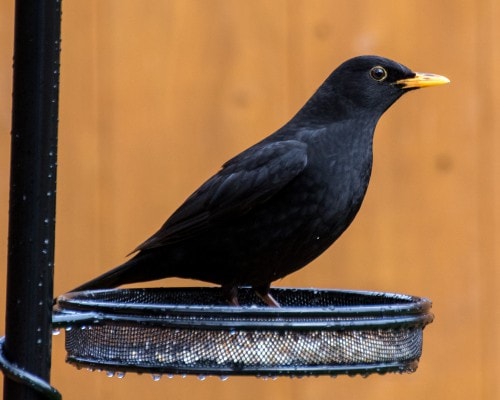
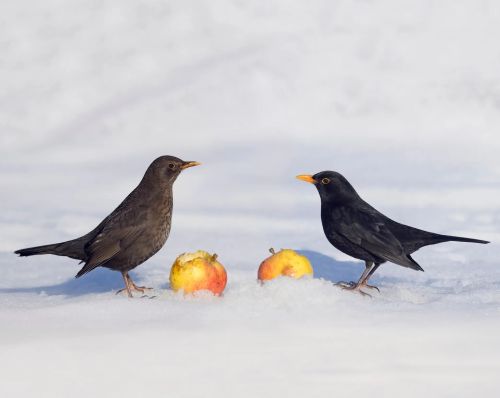
- Male Blackbirds are black with a bright orange-yellow beak and yellow eye-ring. Females are brown often with spots and streaks on their breasts and brown beak. The Blackbird is one of the most common UK birds and one of the most striking. Its mellow song is also a favourite.
- Blue Tits
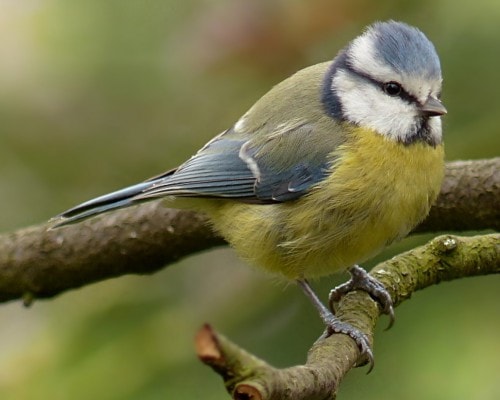
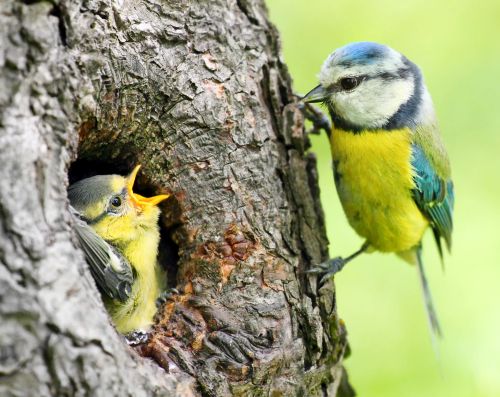
- A colourful mix of blue, yellow, white and green makes the Blue Tit one of our most attractive and most recognisable garden visitors. In winter, family flocks join up with other tits as they search for food. A garden with four or five Blue Tits at a feeder at any one time may be feeding 20 or more.
- Bullfinches
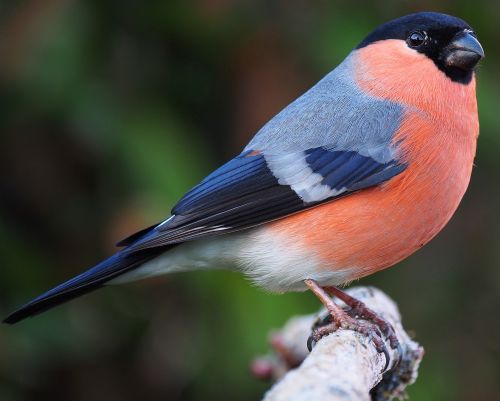
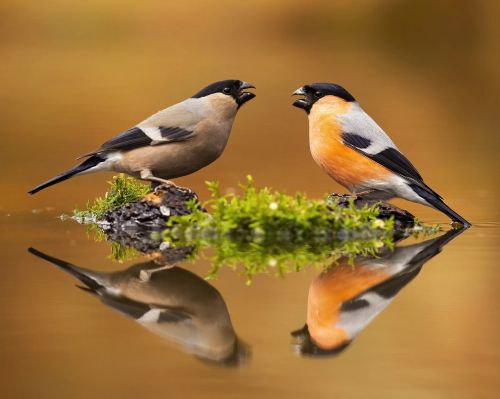
- The male Bullfinch is unmistakable with his bright pinkish-red breast and cheeks, grey back, black cap and tail, and bright white rump. The flash of the rump in flight and piping whistled call are usually the first signs of Bullfinches being present. They feed heavily on the buds of various trees in spring and were once considered a pest of fruit crops.
- Buzzard
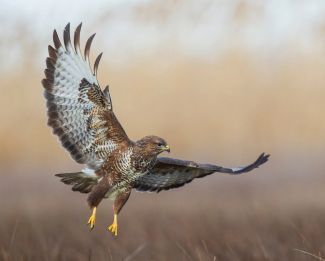
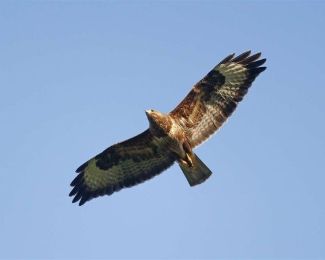
- Now the most common and widespread UK bird of prey, the Buzzard is quite large with broad, rounded wings, and a short neck and tail. When gliding and soaring, it will often hold its wings in a shallow 'V' and the tail is fanned. Buzzards vary in colour from all dark brown to much paler variations, but all have dark wingtips and a finely-striped tail. Their mournful mewing call could be mistaken for a cat.
- Chaffinches
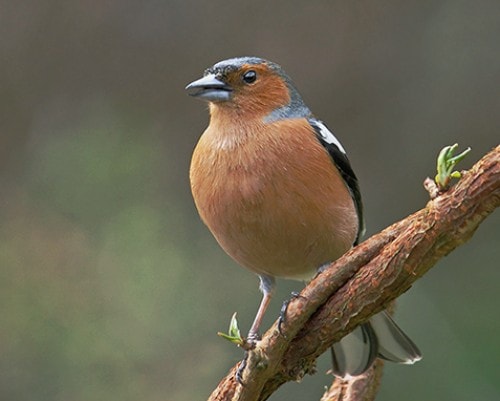
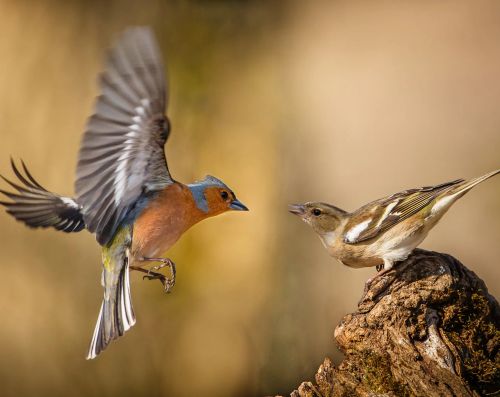
- The Chaffinch is one of the most widespread and common birds in Britain and Ireland. Its patterned feathers help it blend in when feeding on the ground, so it's easiest to see when it flies, as a flash of white on the wings and white outer tail feathers is revealed. It's shy when it comes to bird feeders, preferring to hop about under the bird table or under the hedge. You'll usually hear Chaffinches before you see them, thanks to their loud song and range of calls.
- Coal Tits
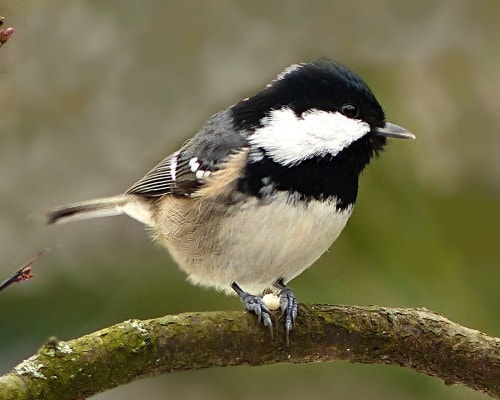
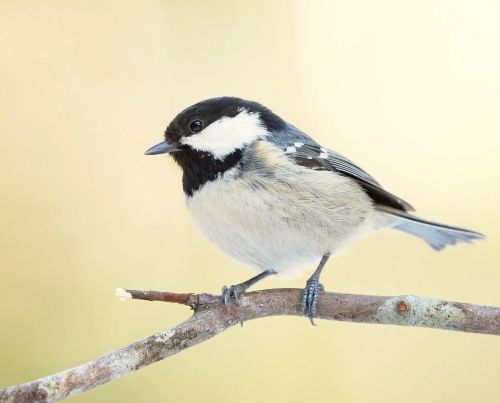
- Not as colourful as some of its relatives, the Coal Tit has a distinctive grey back, black cap, and white patch at the back of its neck. It has a smaller, skinnier bill than Blue or Great Tits which helps it feed in conifers. A regular visitor to most feeders, they will take and store food for eating later. In winter they join with other tits to form flocks which roam through woodland and gardens in search of food.
- Collared Doves
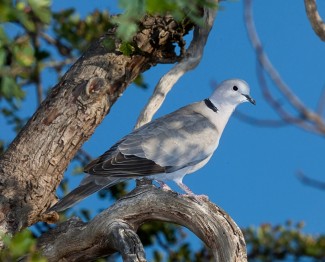
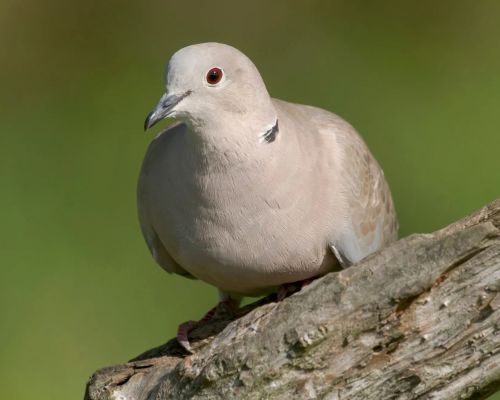
- Collared Doves are a pale, pinky-brown-grey colour, with a distinctive black neck collar (as the name suggests). They have deep red eyes and reddish feet. Their cooing, which can sometimes seem to go on forever, will be a familiar sound to many of you. Although you'll often see them on their own or in pairs, flocks may form where there is a lot of food available.
- Dunnocks
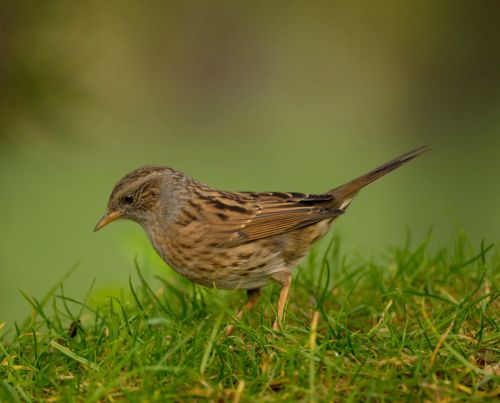
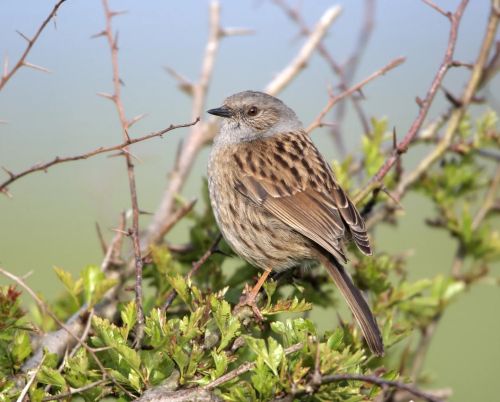
- The Dunnock is a small brown and grey bird. Quiet and shy, it's often seen on its own, creeping along the edge of a flower bed or near to a bush, moving in a rather nervous, shuffling way, often flicking its wings as it goes. When two rival males come together they become animated with lots of wing-flicking and loud calling.
- Goldfinches
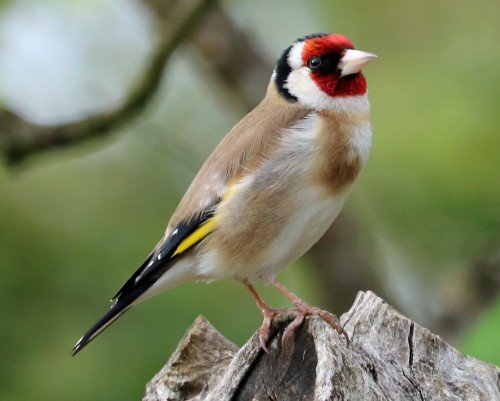
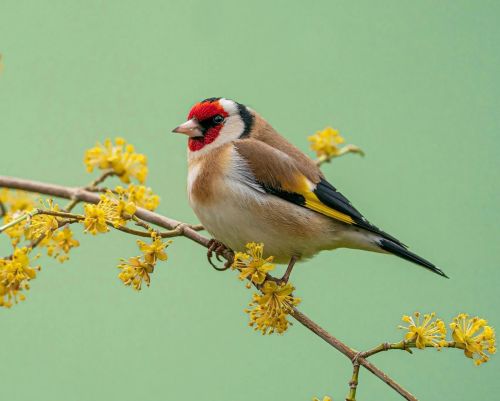
- The Goldfinch is a colourful finch with a bright red face and yellow wing patch. It's a very sociable bird, often breeding in loose groups. It has a delightful twittering song and call. Their fine beaks allow them to extract otherwise inaccessible seeds from thistles and teasels. Increasingly, they are visiting bird tables and feeders. In winter, many UK Goldfinches migrate as far south as Spain.
- Great Tits
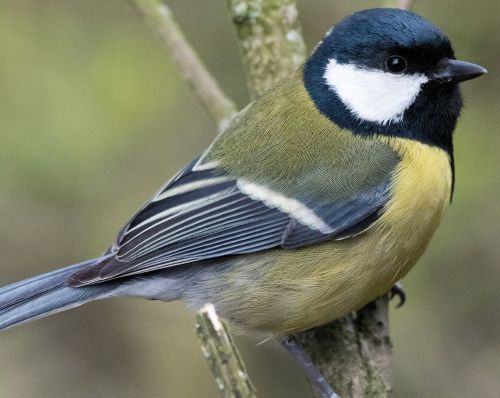
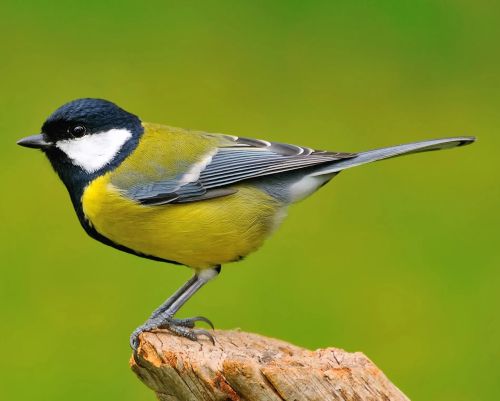
- This is the largest UK tit with a distinctive two-syllable song. It has a green and yellow body and a striking glossy black head with white cheeks. It's a woodland bird that has readily adapted to man-made habitats to become a familiar garden visitor. It can be quite aggressive at a bird table, fighting off smaller tits. In winter, it joins with Blue Tits and others to form roaming flocks which scour gardens and countryside for food.
- Great Spotted Woodpeckers
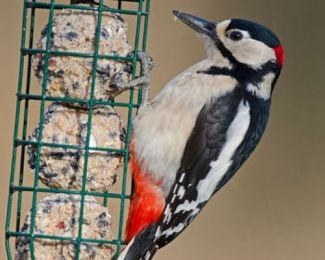
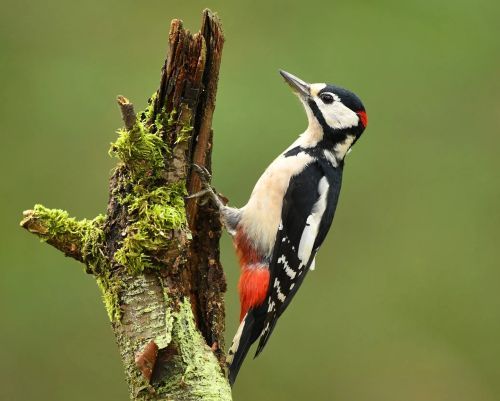
- About Blackbird-sized and striking black and white. It has a very distinctive bouncing flight and spends most of its time clinging to tree trunks and branches, often trying to hide on the side away from the observer. Its presence is often announced by its loud call or by its distinctive spring drumming display. The male has a bright red patch on the back of the head and young birds have a red crown.
- Greenfinches
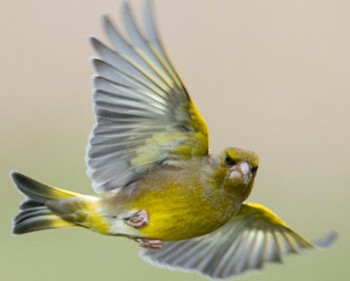
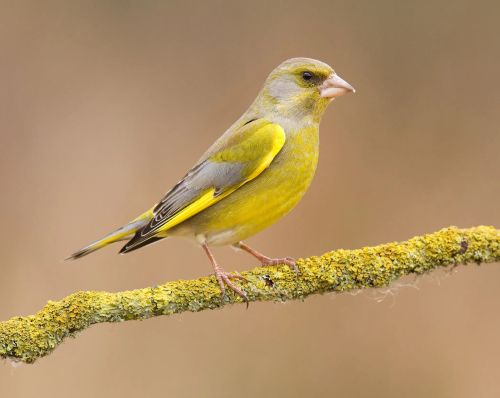
- Its twittering, wheezing song and flash of yellow and green as it flies make this finch a truly colourful character. Nesting in a conifer, or feasting on black sunflower seeds, the Greenfinch is a regular garden visitor, able to take advantage of food in rural and urban gardens. Although quite sociable, they may squabble among themselves or with other birds at the bird table. Greenfinch populations declined during the late 1970s and early 1980s but increased dramatically during the 1990s. A recent decline in numbers has been linked to an outbreak of trichomonosis, a parasite-induced disease that prevents the birds from feeding properly. To help stop the spread, make sure to keep your bird feeders clean.
- House Sparrows
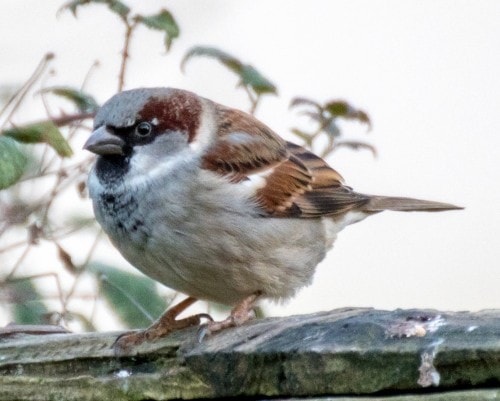
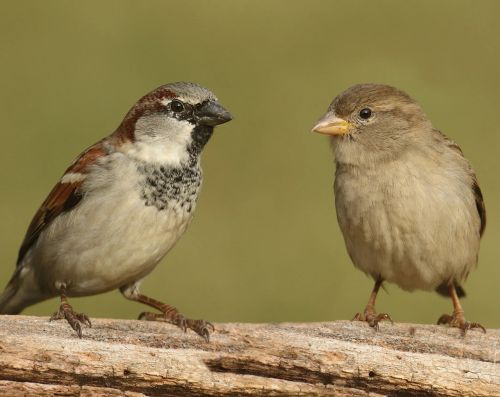
- These noisy and sociable birds are found around the world, thanks to their cheerful ability to make the most of humanity's rubbish and wastefulness. But monitoring suggests a severe decline in the UK House Sparrow population, recently estimated as dropping by 71% between 1977 and 2008 with large falls in both rural and urban populations. Their numbers are still dropping in England, Breeding Bird Survey data indicates recent population increases in Scotland, Wales and Northern Ireland.
- Long-Tailed Tits
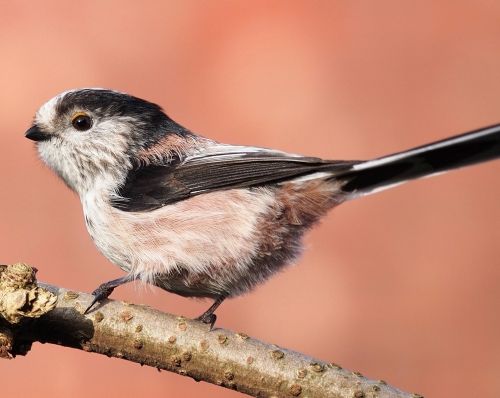
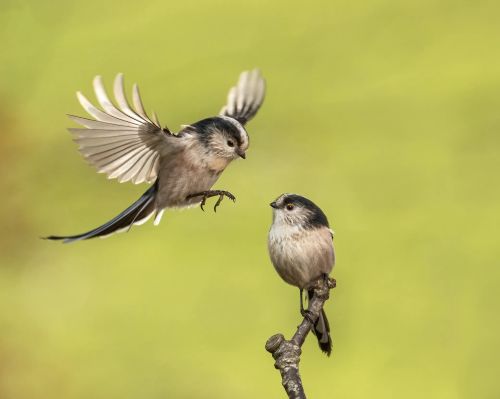
- The Long-tailed Tit is easily recognisable with its distinctive blush, black and white colouring. It also has a tail which is bigger than its body, and a bouncing flight. Sociable and noisy residents, Long-tailed Tits are most usually noticed in small, excitable flocks of about 20 birds. Like most tits, they rove the woods and hedgerows, but are also seen on heaths and commons with suitable bushes.
- Nuthatches
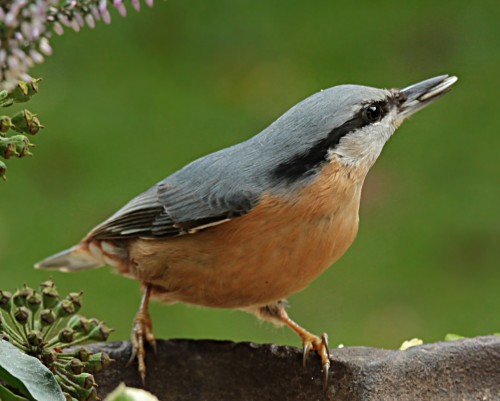
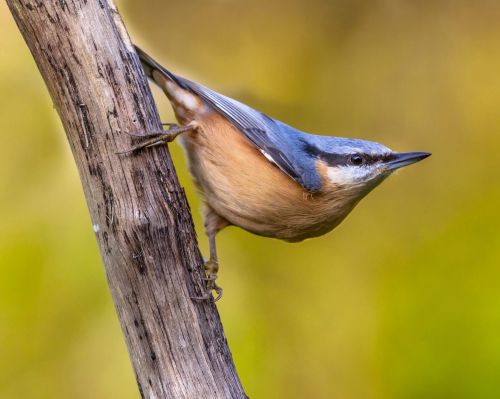
- The Nuthatch is a plump bird about the size of a Great Tit that resembles a small Woodpecker. It's blue-grey on top and whitish below, with chestnut on its sides and under its tail. It has a black stripe on its head, a long black pointed bill and short legs. It breeds throughout England and Wales and has recently begun to breed in southern Scotland. It is a resident, with birds rarely travelling far from the woods where they hatch.
- Pheasants
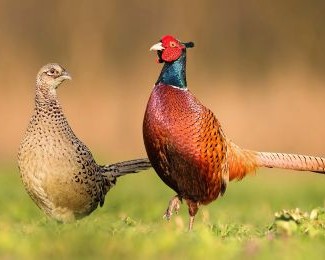
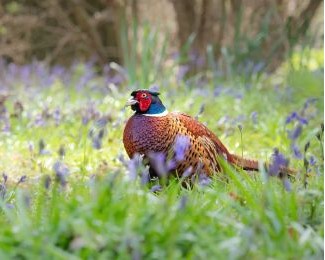
- Pheasants are large, long-tailed game birds. The males have rich chestnut, golden-brown and black markings on their bodies and tails, with a dark green head and red face wattling. Females are mottled with paler brown and black. They were introduced to the UK long ago and more recent introductions have brought in a variety of breeds for sport shooting.
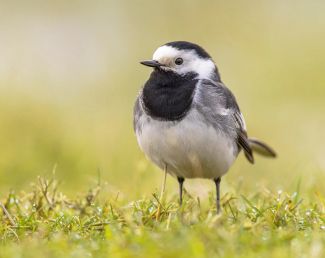
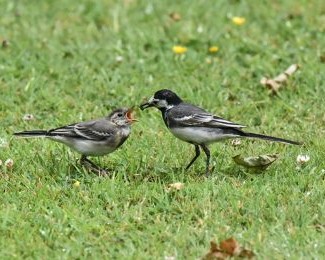
- Pied Wagtail
- The Pied Wagtail is a delightful small, long-tailed and rather sprightly black and white bird. When it's not standing and frantically wagging its tail up and down, it can be seen dashing about over lawns or car parks in search of food. It often calls during its bouncing flight and can be seen gathering at dusk to form large roosts in city centres.
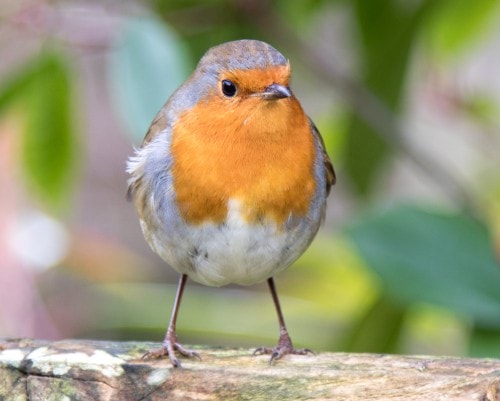
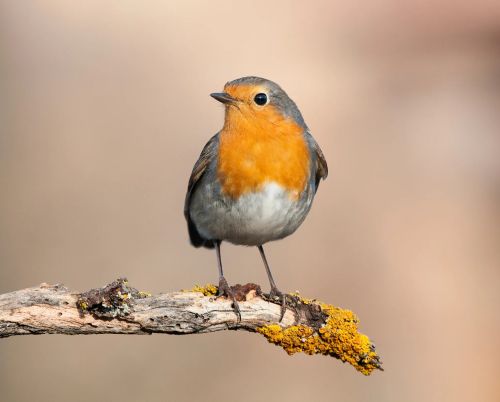
- Robins
- The UK's favourite bird. Thanks to its bright red breast, it's familiar throughout the year and especially at Christmas. Males and females look identical, young birds have no red breast and are spotted with golden brown. Robins sing nearly all year round and despite their cute appearance, they are aggressively territorial and are quick to drive away intruders. They will sing at night next to street lights.
- Siskins
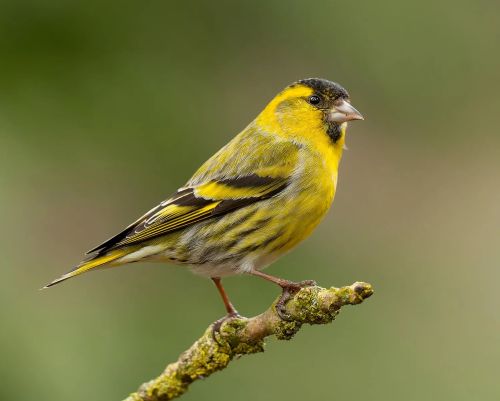
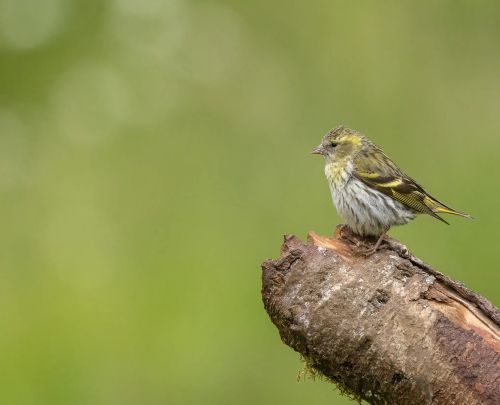
- The Siskin is a small, lively finch, smaller than a Greenfinch. It has a distinctly forked tail and a narrow bill. The male has a streaky yellow-green body and a black crown and bib. There are yellow patches in the wings and tail. It's a resident breeder from southern England to northern Scotland, but is most numerous in Scotland and Wales. Many breeding birds are residents but in winter, birds also arrive here from Europe.
- Song Thrushes
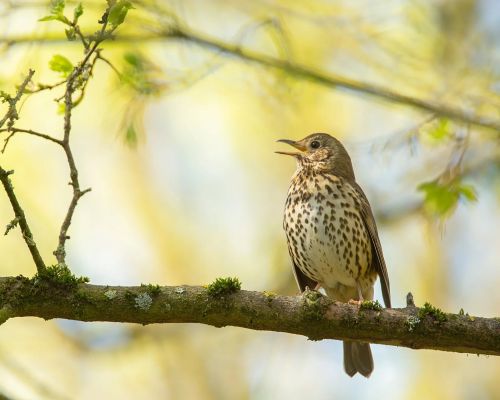
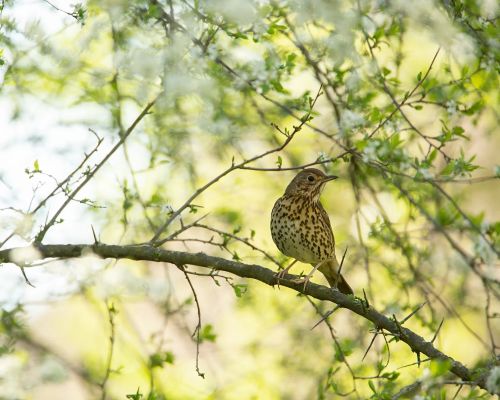
- A familiar and popular garden songbird whose numbers have declined significantly on farmland and in towns and cities. It's smaller and browner than a Mistle Thrush with smaller spotting. Its habit of repeating song phrases sets it apart from singing Blackbirds. It likes to eat snails, breaking into them by smashing them against a stone with a flick of the head.
- Sparrowhawk
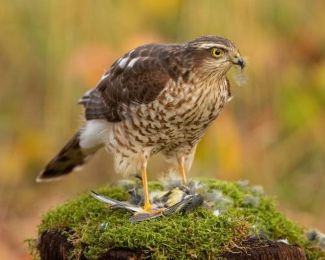
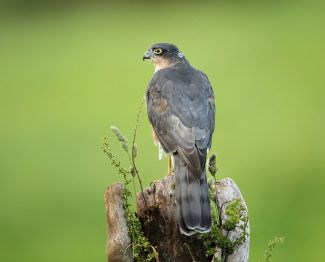
- Sparrowhawks are small birds of prey. They're adapted for hunting birds in confined spaces like dense woodland, so gardens are ideal hunting grounds for them. Adult male Sparrowhawks have a bluish-grey back and wings and orangey-brown stripes on their chest and belly. Females and young birds have brown back and wings, and brown stripes underneath. Sparrowhawks have bright yellow or orangey eyes, yellow legs and talons. Females are larger than males, as with all birds of prey.
- Starlings
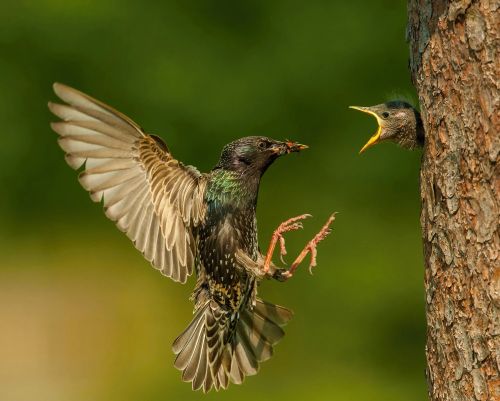
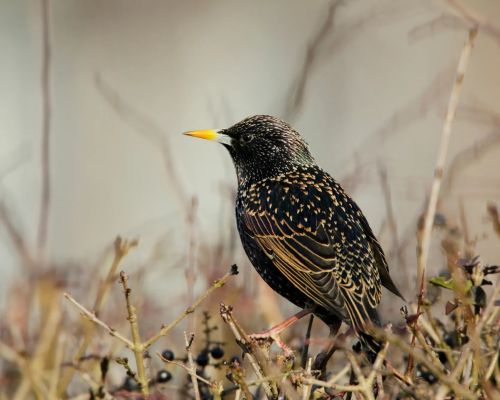
- Smaller than Blackbirds, Starlings have a short tail, pointed head and triangular wings. In their breeding plumage, they look black at a distance. When seen closer, they are very glossy with a sheen of purples and greens. Their feathers are also flecked with white and this is especially noticeable in their winter plumage, which is more brown with many bright white spots. Starling flight is fast and direct and they walk and run confidently on the ground. Noisy and social, Starlings spend a lot of the year in flocks. Starlings are fantastic mimics and can make a huge variety of tweets, cheeps, clicks and burrs. Still one of the most common garden birds, its decline elsewhere makes it a Red List species.
- Tree Sparrows
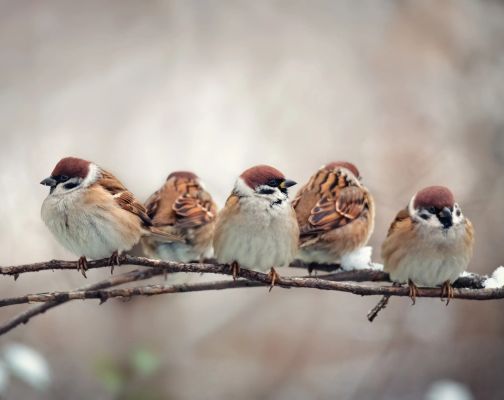
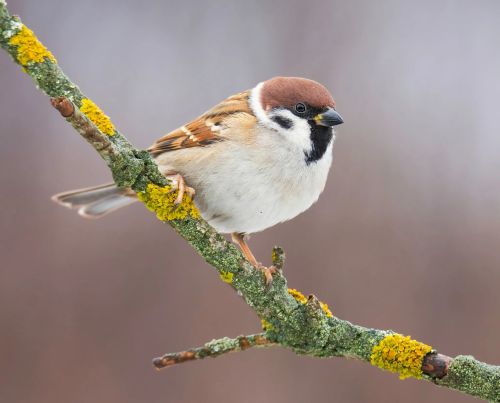
- Tree Sparrows are smaller than House Sparrows, and are more active, often sticking their tails up. The Tree Sparrow has a chestnut brown head and back of the neck (rather than grey) and white cheeks and collar with a contrasting black cheek spot. They're shyer than House Sparrows in the UK, and are rarely associated with people, although in continental Europe they often nest in buildings just like House Sparrows. The UK Tree Sparrow population has suffered a severe decline, thought to be 93% between 1970 and 2008. But recent Breeding Bird Survey data is encouraging, suggesting that numbers may have started to increase, although from a very low point.
- Woodpigeons
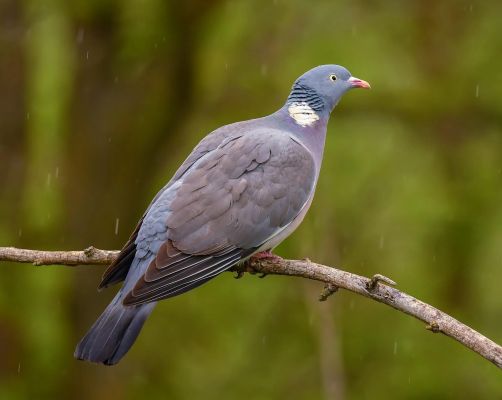
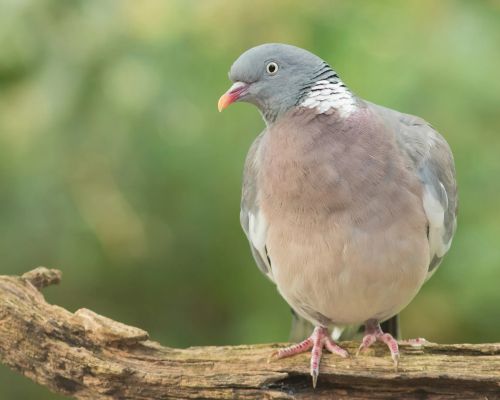
- The UK's largest and most common pigeon, the Woodpigeon is largely grey with a white neck patch and white wing patches, clearly visible in flight. Although shy in the countryside it can be tame and approachable in towns and cities. Its cooing call is a familiar sound in woodland as is the loud clatter of its wings when it flies away.
- The UK's largest and most common pigeon, the Woodpigeon is largely grey with a white neck patch and white wing patches, clearly visible in flight. Although shy in the countryside it can be tame and approachable in towns and cities. Its cooing call is a familiar sound in woodland as is the loud clatter of its wings when it flies away.
- Wrens
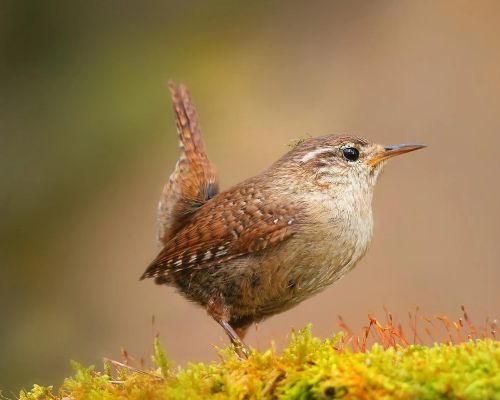
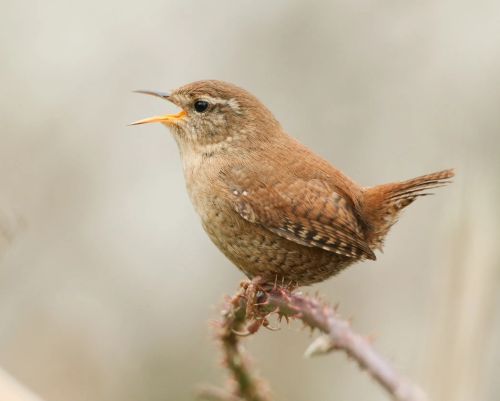
- The Wren is a tiny brown bird, although it's heavier and not as slim as the even smaller Goldcrest. It's almost round in shape with a fine bill, quite long legs and toes, very short round wings and a short, narrow tail, which is sometimes stuck up vertically. For such a small bird, it has a remarkably loud voice. It's the most common UK breeding bird, and a common garden visitor, although it suffers declines during prolonged, severely cold winters.
- Yellowhammers
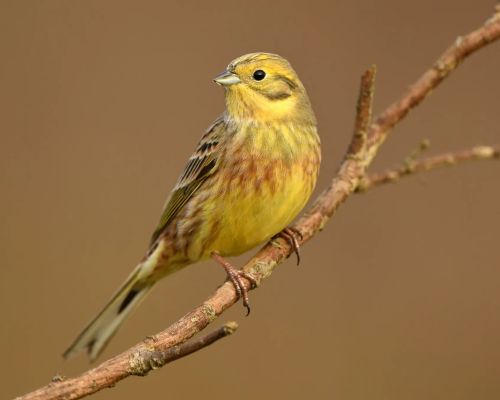
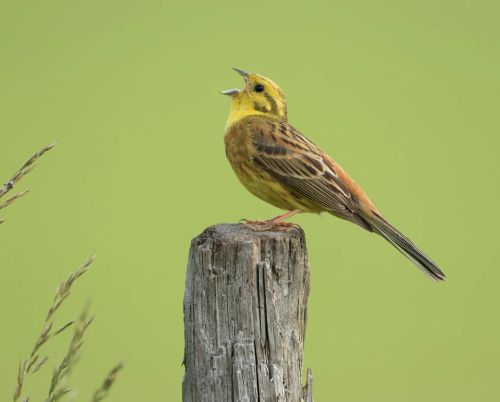
- Male Yellowhammers are unmistakeable with a bright yellow head and underparts, brown back streaked with black, and a chestnut rump. In flight, it shows white outer tail feathers. They're often seen perched on top of a hedge or bush, singing. Its recent population decline makes it a UK Birds of Conservation Concern Red List species.
- Garden Plants
Brambles Bed and Breakfast
Whitnage Cottage | Whitnage | Uplowman | Tiverton | Devon | EX16 7DS
01884 829211 | Email